
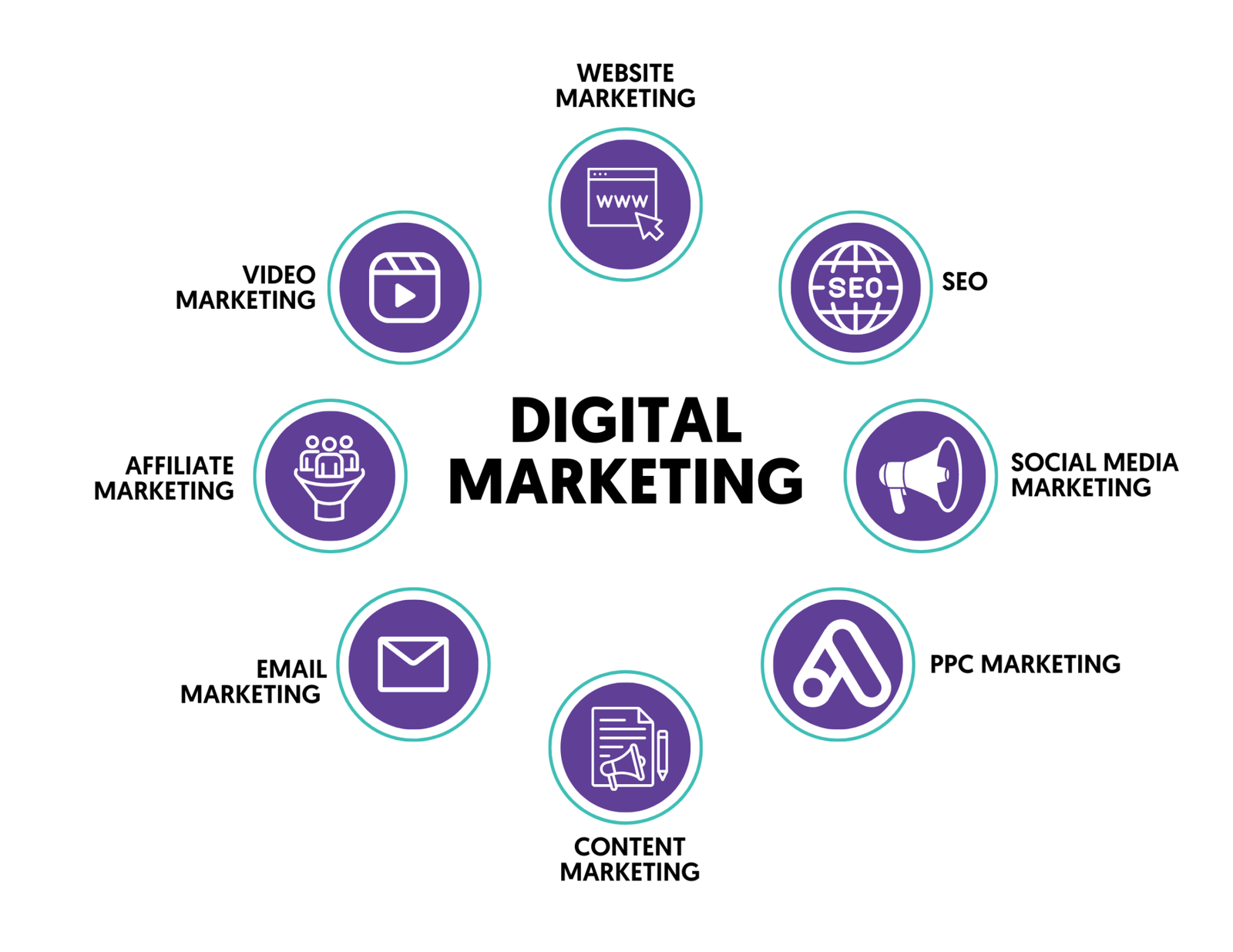
the use of the internet, electronic devices, and digital platforms like websites, social media, search engines, and apps to promote products and services
Key Channels and Strategies
- Websites and Landing Pages: Core platforms for showcasing information, generating leads, and facilitating online transactions.
- Search Engine Optimization (SEO): Improving website visibility and ranking in search engine results to attract organic traffic.
- Search Engine Marketing (SEM): A broader category that includes SEO and paid advertising on search engines, such as pay-per-click (PPC) campaigns.
- Social Media Marketing: Promoting brands, engaging with customers, and building communities on platforms like Facebook, Instagram, and X (formerly Twitter).
- Email Marketing: Sending promotional messages, newsletters, and personalized content to a targeted list of contacts.
- Content Marketing: Creating and distributing valuable, relevant, and consistent content to attract and retain a clearly defined audience.
- Mobile Marketing: Reaching customers through mobile devices via text messages, mobile apps, and mobile-optimized websites.
Benefits of Digital Marketing
- Wider Reach: Access to a global audience through the internet and digital platforms.
- Targeted Advertising: The ability to show ads to specific demographics, interests, and online behaviors, increasing relevance and effectiveness.
- Measurable Results: Digital tools allow for detailed tracking of engagement, website visits, and other metrics, providing insights for optimization.
- Cost-Effectiveness: Often more budget-friendly than traditional advertising, with a lower barrier to entry for businesses of all sizes.
- Enhanced Customer Engagement: Facilitates direct interaction with customers, helping to build trust and loyalty.